
Culture and Globalisation in Wang Qingsong’s Photography – By Magdalena Furmanik-Kowalska
2019The first work shows a Chinese man (the artist himself) hanging on a cross, which was made from Coke cans. He looks like a crucified Jesus Christ, but also reminiscent of a scarecrow because of the surrounding cereal fields. The sky behind him is pink and blue, characteristic of Jesus iconography. Beside the Coca-Cola cans, other elements emphasising a consumer and materialistic lifestyle are colourful, flying mobile phones. An originally dramatic figure was presented in this work in a camp style to depict how current religious icons are treated in China by the government, but also by society. This situation applies to local goddess and heroes as well. “Prisoner” (Ill. 2) illustrates, as a title said, a man who is deprived of his liberty. His jail is built from Coke cans, so probably he cast himself into incarceration. Whereas, the title “Thinker” (Ill. 3) is shown in a meditation position sitting on a cabbage with a McDonalds logo on his chest. All these images refer to the consumer culture, which became common in China after years of hunger and sacrifices – effects of the Cultural Revolution (1966 – 1977) and other economic failures of Mao government. Because of globalisation and dramatic effort undertaken in the recent history, Chinese people are loosing their sense of traditional culture, habits, values, and beliefs. The artist himself commented on this in such a way: “In food, it is well known that McDonald’s and Pizza Hut are just fast-food stores in Europe and America, nothing more than convenience. However, when they came into China, they became the top cuisine and hot rendezvous for people to have parties, invite friends, celebrate birthdays and meet lovers. On the surface, this phenomenon of going after what is western style represents an ideal for Euro-American materialistic life”.
All three mentioned above photographs taken in 1998 depict, by using sar- castic humour and camp aesthetics, the contrast between a materialistic lifestyle and the spiritual values symbolised by Jesus, political prisoners and Buddha. But as Wang underlines, the meaning of these figures is unfortunately different in contemporary Chinese society: “As the quintessence of Chinese traditional culture, Buddhism has accompanied Chinese civilisation for thousands of years. It brings comfort and fortune to the people, inspires their soul and enlightens a responsibility for having good relations with the others. This Buddha used to set its goal to save the suffering through self-devotion. However, in the current commercial society, the respectable Buddha has also been changed. It reaches out its hands insatiably for money and material goods towards every troubled person”.
The same issue is also a theme of other works by the artist. There are two art pieces in the series “Requesting Buddha” (Ill. 4). Both photographs depict a multi-handed Buddha. In the first picture he sits on throne made of a box with a Coca-Cola logo as well as paper bows. The divine being has eleven arms, in which he holds goods, such as beer, cigarettes, a CD, mobile phone, money, Kodak film, a golden cup, yuanbao – a traditional opera prop symbolising gold, and a small PRC flag. The second Buddha has a female body with the artist’s head and stands on one leg on a cabbage instead on a lotus – a symbol of purity. He/she can be identified as Bodhisattva Avalokiteśvara, which is depicted in a female form as Guanyin in China. According to the Buddhist tradition, figures should make mudras and hold sacred treasures and weapons against weak- nesses, although in Wang’ works, they present consumer goods – representa-tion of a materialistic lifestyle. A similar comment is contained in triptychs from 2002 such as “Pre-incarnation” and “Incarnation”. Both artworks depict Buddha with two Dakinis flanking him, but in the first photograph the whole statues are corrupted and without some part of their bodies, while in the second one the figures are richly decorated and covered by gold. Workers and soldiers visit wounded statues, when wealthy gods are worshiped and adored by believers and the photographer. By referring to images from Vajrayana Buddhism, these triptychs disclose social changes taking place in China and they depict the rebuilding of this country.
Wang Qingsong has also used other quotes from his art tradition to criticise the consumption culture. In the series titled “Fake Flowers” (2003) he used peo- nies – a popular symbol of national brilliance and prosperity in China. Floral compositions, which can be seen in photographs, relate significantly to the Chi- nese ink painting scrolls from the Qing Dynasty (1644 – 1912). The characteristic image format and arrangement of the elements such as rocks, flowers and insects are maintained.10) “Fake Flowers” has two sub-series, of which “Ethereal Beauty”, (Ill. 5) and “Auspicious Snow”, (Ill. 6) have respectively similar properties to a hand scroll and to a hanging scroll (“Red Peony”, “White Peony”, and “Frost Peony”). The first photographs shows flowers in full bloom, while the last one pictures peonies covered with frost. The artist kept the flowers in a freezer for a week. He made it to draw attention to transience and vanishing beauty, which is sham, artificial as well as created, because the artist made petals of the flowers by himself using unusual materials – vegetables and raw slices of mutton and beef.
These photographs of Wang Qingsong can also be seem as a critical commen- tary on the commercialisation of Chinese culture, especially traditional culture (the symbol of which is the peony), which becomes another “food to devour” for insatiable modernisation and globalisation. Instead of delicious dishes, there are easily digestible snacks produced for everyone. As Chen Xhingyu aptly pointed out: “Using elements of performance, [Wang Qingsong’s] photographs are often elaborately staged scenes with references to the ever growing fraction between traditional society the gross consumer culture taking over.”
His works created in 2000, such as “Finding Fun”, “Can I cooperate with you”, and “Night Revels of Lao Li” may be similarly perceived. It was the Chi- nese traditional painting that inspired the artist. “Finding Fun” refers to the literati art and “was created on the basis of [artist’s] observations of both the past and present social and life experiences. It is a concentrated reflection on the empty-mindedness I feel about contemporary people who work to make more money. But money never can buy happiness.”12) In contrast to the original subject of painting, in the photograph the main character is surrounded by empty cans and women look like cheap prostitutes. Two other artist’ works were created under the influence of the court painting of the Tang (618 – 907) and the Song dynasties (960 – 1279). “Can I cooperate with you” shows a white man sitting in a rickshaw under two big fans with the logo of the Coca Cola logo held by Chinese women. There also are two kneeling men before him and another one presenting him a small PRC flag. This scene is a pastiche of from a famous hand scroll titled “The Imperial Sedan Chair” attributed to Yan Liben (ca. 600 – 673), which depicts the Emperor Taizong greeting the Tibetan minister. Nonetheless, the contemporary image of China shows the country as a dependent for global consumption. The illustration of present-day Chinese people situation, especially intellectuals, is a theme of the work “Night Revel of Lao Li”. It refers to the hand scroll describing banquets organised once by Han Xizai – a representative of the Chinese elite during the Post-Tang Dynasty. The story of Han Xizai was an inspiration for Wang Qingsong, who commented: “He was powerless to fulfil his ideals of reconstructing the country. To “cleanse” himself, he chose to evade and “indulge in” comfort. After several centuries, even though the Chinese dynasties have changed frequently, the status of intel- lectuals in society has remained the same. With some thoughts on this question, I created ‘Night Revel of Lao Li’.”13) The work shows men spending time with women wearing very short and colourful clothes. The men eat fruits and drink foreign alcohol with sodas. Most of them look bored, some of them pleased with the girls’ performances. They do not create anything, do not discuss, and even do not derive pleasure for any entertainment.
In 2003 the artist created new several works, which closely refer to the European art, but simultaneously include local tradition. “China mansion” (Ill. 7) as well as “Romantique” takes the format of a hand scroll. The first of these panoramic photographs, as title suggests, depicts an interior of Chinese house, where Wang Qingsong put difference scenes. “In the staging of ‘China Mansion’, I invited models to play the parts of foreign guests, mimicking postures in paintings by Ingres, Courbet, Manet, Gauguin, Klein, Boucher, Rembrandt, Rubens, Man Ray, and several other artists. I wanted my models to communicate with each other across centuries and at the same time dialoguing with Chinese culture so as to create certain amiable relationships” – the artist commented.
The mansion has two doors, which are guarded by a Chinese family – a host wearing a banner of ‘welcome’ at the right and by soldier looking like a ter- racotta one, but also as “a robber, preventing the honourable guests from freely circulating and instead forcing them to leave something valuable behind”.15) Between them there are naked or half naked women in situations and poses known from Western Masters’ paintings such as “Madonna” by Rafael Santi, “Last Supper” by Leonardo da Vinci, “Sleepers” by Gustave Caubert, “Olimpia” by Édouard Manet, “Puberty” by Edvard Munch, “Grande Odalisque” or “Jupiter and Antiope“ by Jean-Auguste-Dominique Ingres, “Monote Symphony” by Yves Klein, “Helena Fourment in fur” by Peter Paul Rubens, “Salome” by Gustave Moreau, “Venus and Adonis” by Tizian, “Resting Maiden” by François Boucher – just to mention but a few of them. They are surrounded by traditional Chinese furniture mostly, and also by pillars imitating ancient European architecture. In this house, the past and the present are mixed together and artistic tradition of various cultures is mixed as well. “China mansion” is a perfect illustration of an idea of the cultural supermarket, which was described by Gordon Mathews in his book Global Culture / Individual Identity in 2000.16) According to the anthropologist, the cultural supermarket provides us information and potential identity from around the world and allows us to choose our favourite and the most desirable.
The vision of a paradise became also a part of global supermarket of cultures. It became a theme of Wang Qingsong’s work titled “Romantique” (Ill. 8). The artist has described it in such words: “(…) one seems to walk into a land that is half the heaven of western religion and half a pastoral Chinese garden. There are cheap plastic leaves, fruits, flowers, and decorations. The little ponds in this paradise emit a light smoke created from dry ice. Viewers can imagine false happiness in this fabricated beautiful paradise.”17) There are women groups and a few men in this imaginary paradise. Similar like in “China Mansion”, their gestures and poses refer to well known Western Master paintings such as “Fountain” by Jean-Auguste-Dominique Ingres, “The Large Bather” by Auguste Renoir, “The Expulsion from the Garden of Eden” by Massacio, “The Luncheon on the Grass” by Édouard Manet, and “Birth of Venus” by Andrea Botticelli. Beside them the golden bodhisattva Tara also sits in this garden. Thus, the artist repeats a strategy used in previous artworks to compose “Romantique”. All his works presented above reveal a camp aesthetic as well as a postmodern mixture of different cultures. This is possible because of globalisation allowing the rapid flow of information and goods.
BIBLIOGRAPHY
Chen (2010) = Chen Xhingyu, Chinese Artists: New Media 1990 – 2010, Atglen: Schiffer
Publishing Ltd., 2010. Dziamski (2004) = Grzegorz Dziamski, Od sztuki do kultury wizualnej [From art to visual culture]. In Sztuka współczesna i jej filozoficzne komentarze [Contemporary art and its philosophical comments], Teresa Kostryko, Grzegorz Dziamski, Jacek
Zydorowicz (eds.), Poznań: Adam Mickiewicz University, 2004. Gittings (2005) = John Gittings, The Changing Face of China: From Mao to Market,
Oxford: Oxford University Press, 2005. Książek (2001) = Andrzej Książek, Sztuka przeciw Sztuce. Z teorii awangardy XX wieku [Art against Art: From theories of the twentieth century avant-garde], Warsaw:
AKME Publishing House, 2001. Mathews 2005, Gordon Mathews, Supermarket kultury [Global Culture / Individual Identity: Searching for home in the cultural supermarket], Warsaw: PIW, 2005. Nie (1997) = Nie Chongzheng, The Qing Dynasty. In Yang Xin, Richard M. Bernhard, Nie Chongzheng, James Cahill, Lang Shaojun, Wu Hung, Three Thousand Years of Chinese Painting, New Haven & London: Yale University Press, Beijing: Foreign
Languages Press, 1997. Sontag (1979) = Susan Sontag, “Notatki o kampie”. In: Literatura na Świecie 1979, no 9.
http://web.archive.org/web/20050304071454/
http://pages.zoom.co.uk/leveridge/sontag.html (30.04.2015)
http://www.wangqingsong.com (30.04.2015).
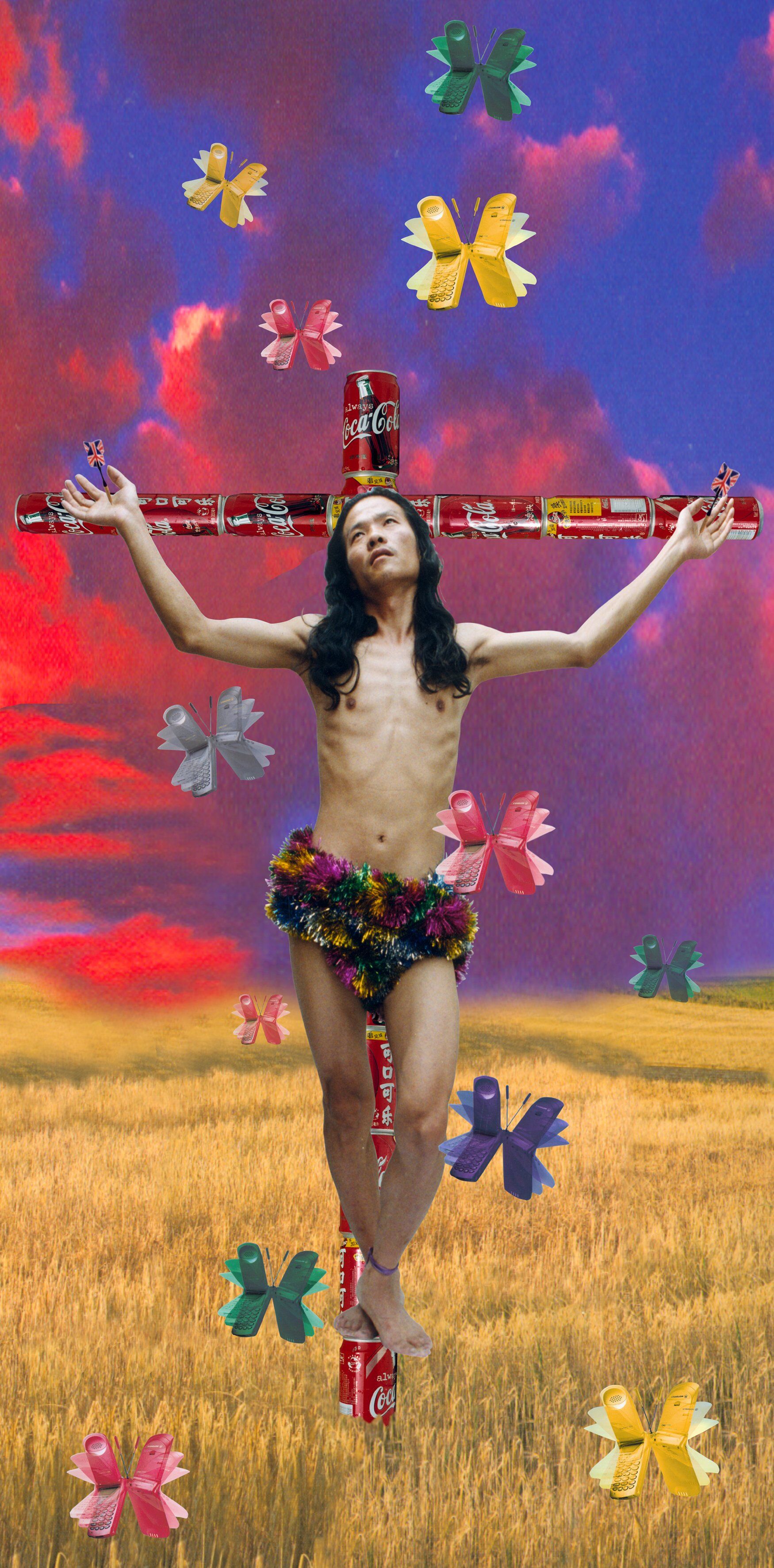
Wang Qingsong, “Catcher”, 180×90 cm, 1998. Photograph by courtesy of Wang Qingsong
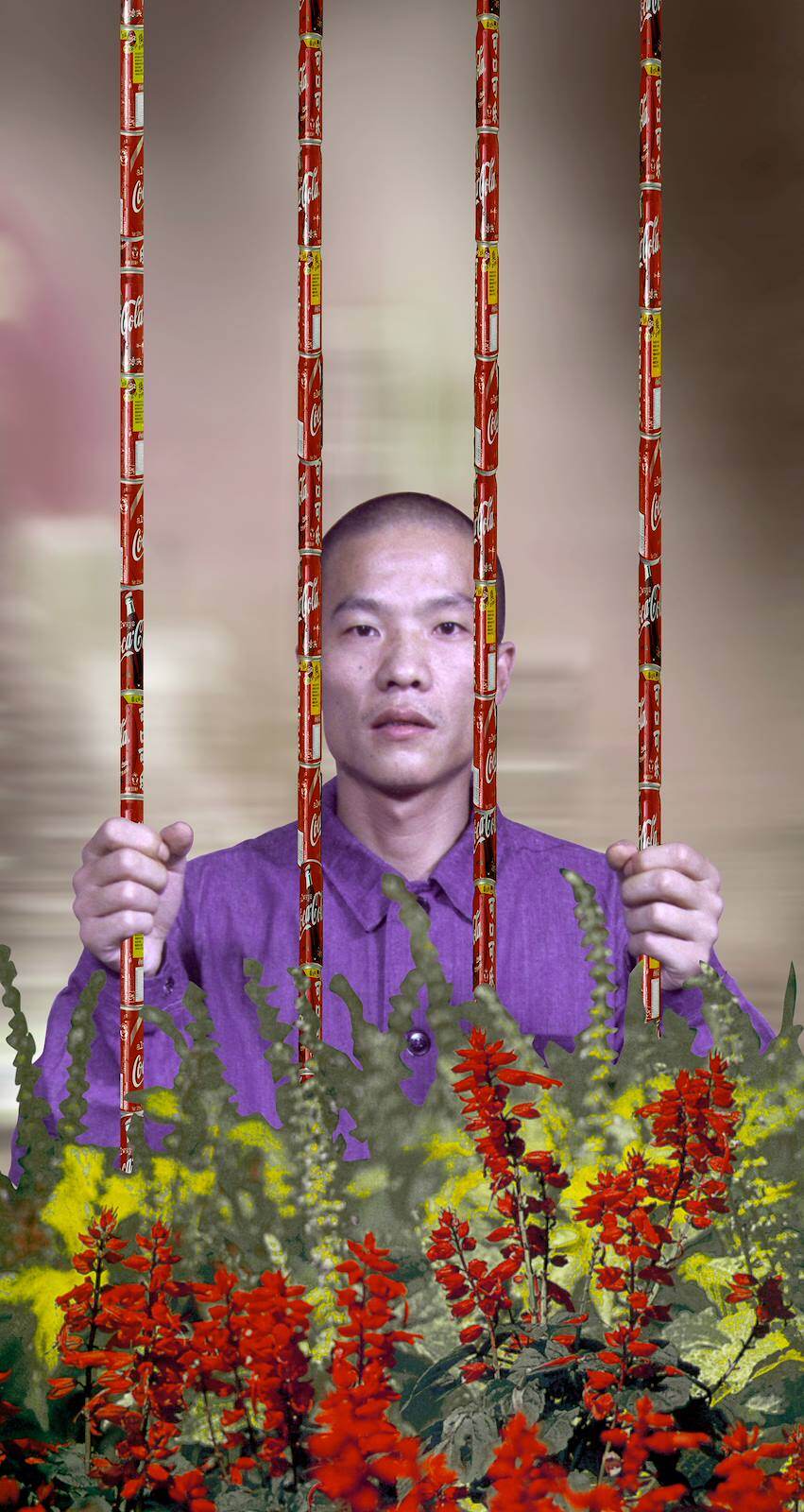
Wang Qingsong, “Prisoner”, 180×95 cm, 1998. Photograph by courtesy of Wang Qingsong
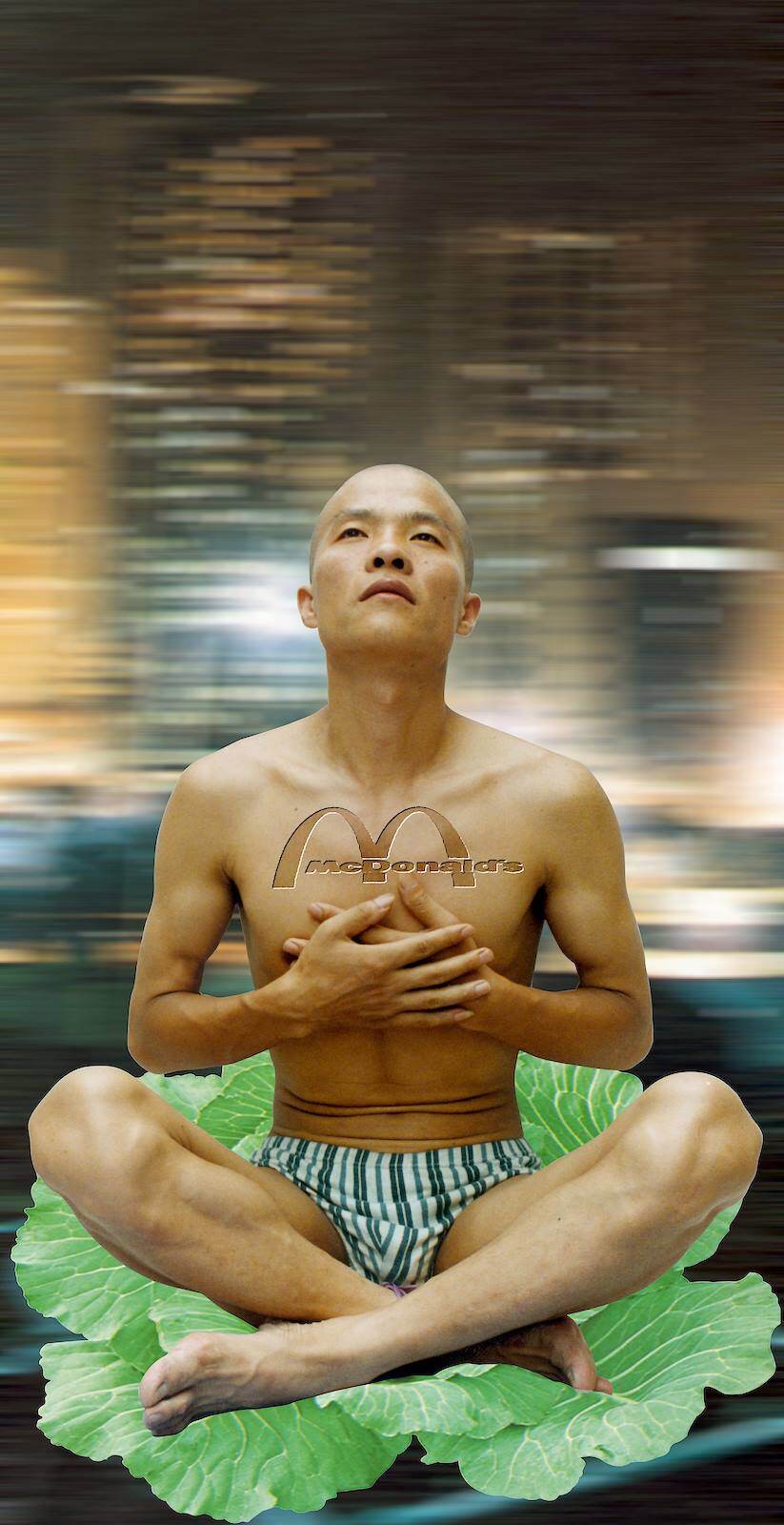
Wang Qingsong, “Thinker”, 180×90 cm, 1998. Photograph by courtesy of Wang Qingsong
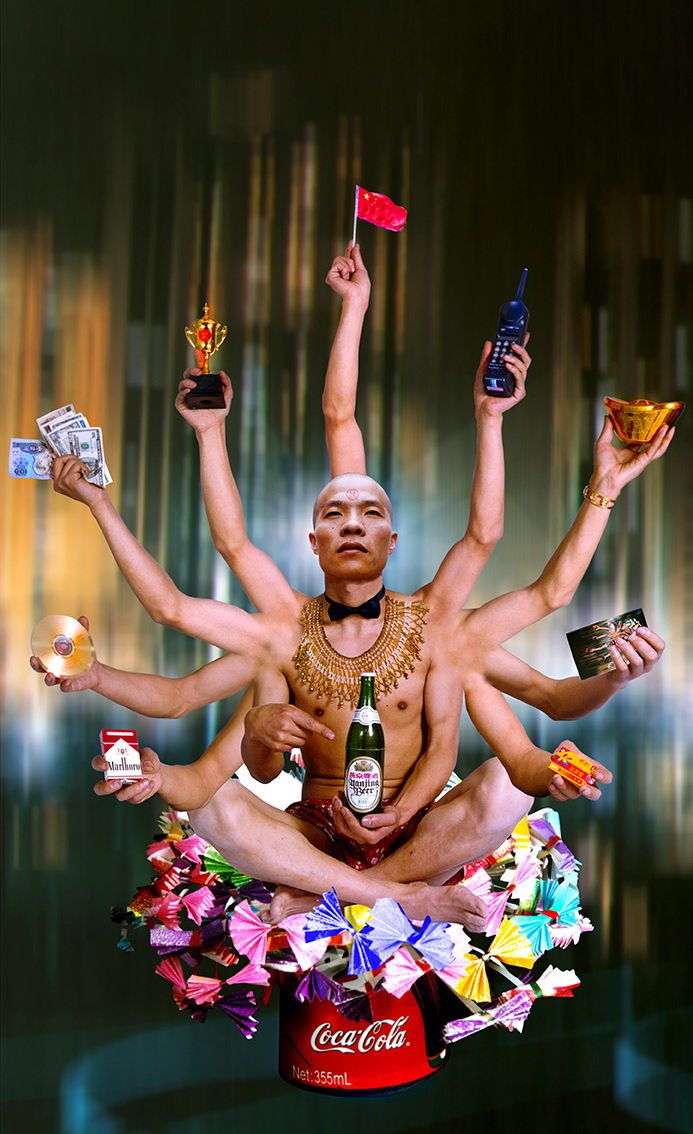
Wang Qingsong, “Requesting Buddha” series no.1, 180×110 cm, 1999. Photograph by courtesy of Wang Qingsong
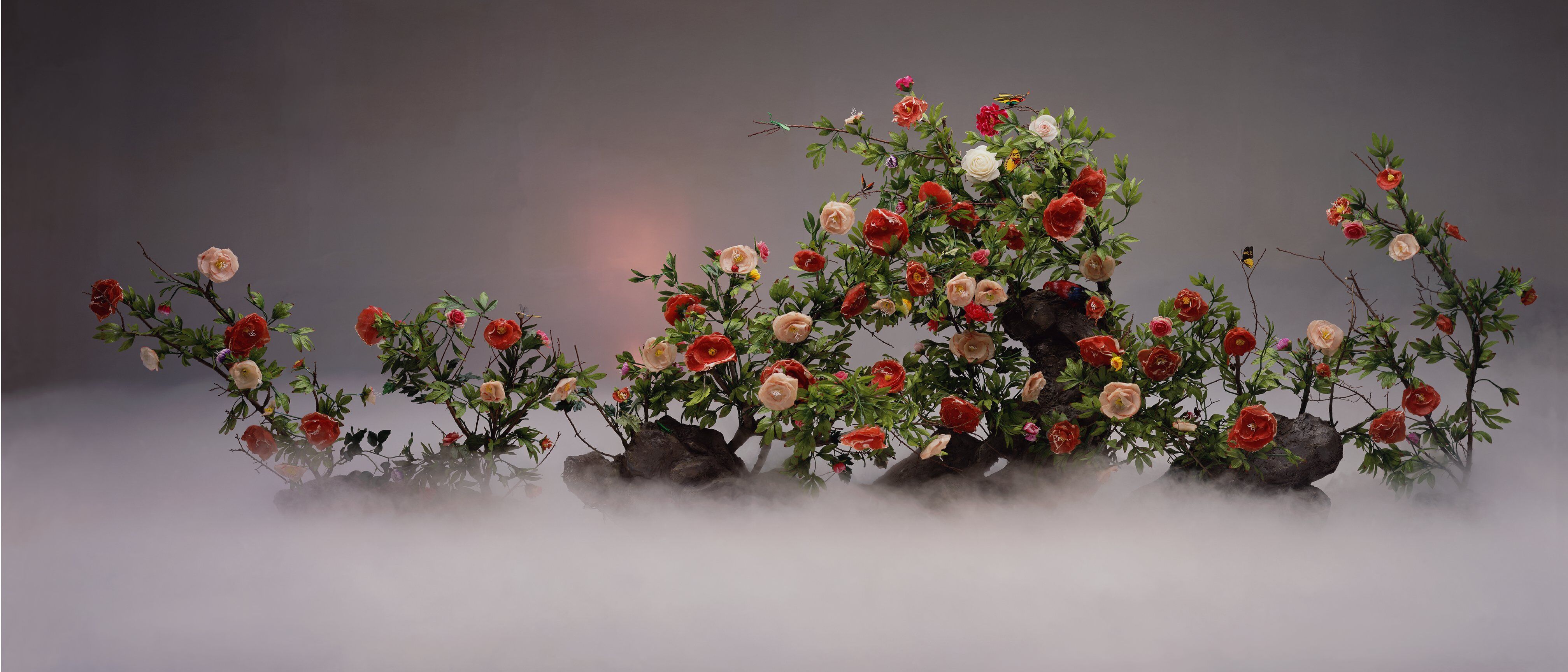
Wang Qingsong, “Ethereal Beauty”, 120×280 cm, 2003. Photograph by courtesy of Wang Qingsong
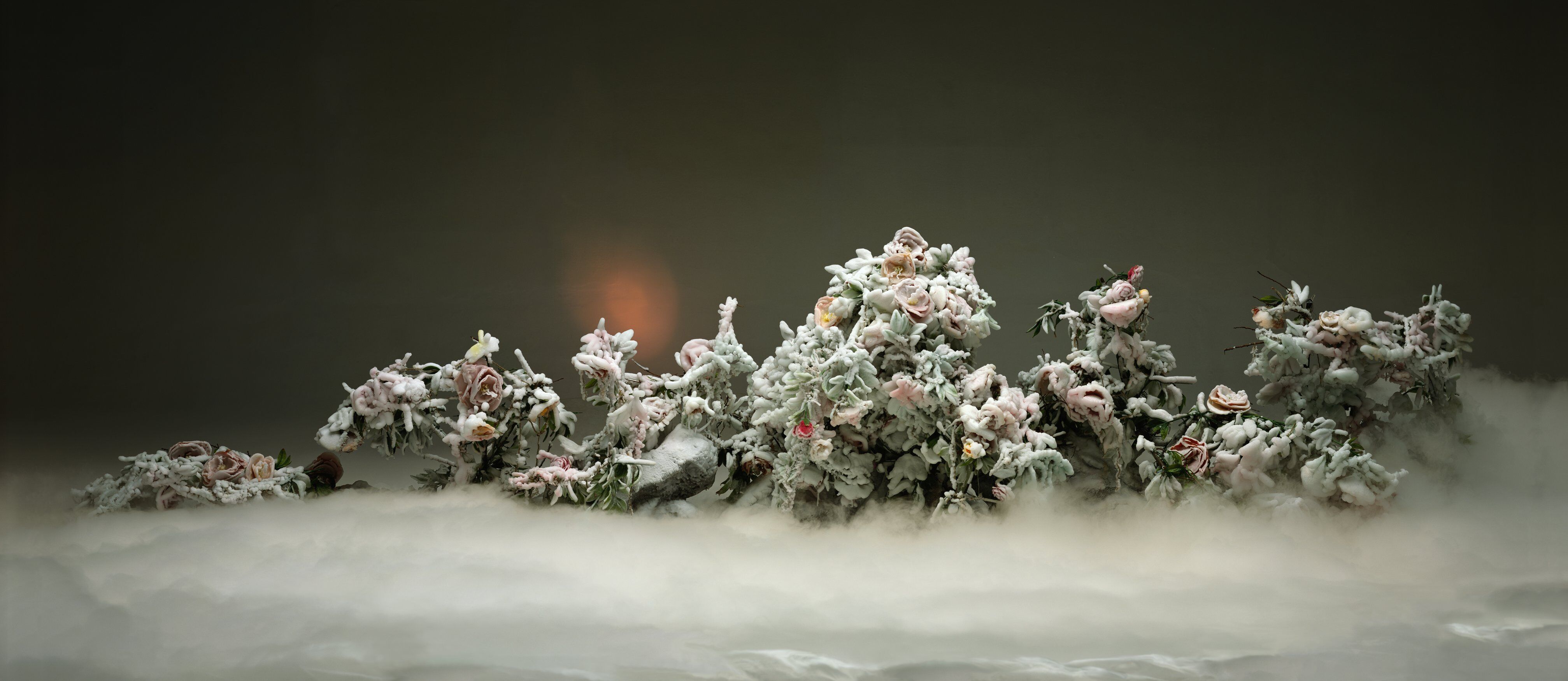
Wang Qingsong, “Auspicious Snow”, 120×280 cm, 2003. Photograph by courtesy of Wang Qingsong.

Wang Qingsong, “China Mansion”, 120×1200 cm, 2003. Photograph by courtesy of Wang Qingsong

Wang Qingsong, “Romantique”, 120×650 cm, 2003. Photograph by courtesy of Wang Qingsong